
Telematics ROI: Cost Benefits for Construction Fleets
Michael Bar
Telematics can save construction fleets thousands of pounds annually. By cutting fuel costs, reducing downtime, and improving theft recovery rates, these systems deliver measurable returns in 6–12 months. For example, a 50-vehicle fleet could save £5,000–£20,000 per year by reducing fuel consumption by 10–25%. Predictive maintenance prevents costly breakdowns, while GPS tracking recovers high-value stolen equipment. Whether you prioritise fuel efficiency, theft prevention, or maintenance savings, telematics offers clear financial benefits tailored to your fleet’s needs.
Key Benefits:
- Fuel Savings: Up to 25% reduction in fuel costs.
- Maintenance: 30–50% fewer unexpected breakdowns.
- Theft Recovery: 91% recovery rate with advanced tracking.
- Downtime Reduction: 20–30% improvement in equipment usage.
Choosing the right system depends on fleet size, budget, and priorities. GRS Fleet Telematics offers affordable subscriptions (£7.99/month per vehicle) and strong theft recovery, while alternative solutions excel in AI-based fuel optimisation but cost more (£15–£20/month per vehicle). Both options deliver long-term savings, making telematics a smart investment for UK construction fleets.
Connected Construction: How Construction Fleets Can Boost Uptime, On-Road Safety & Profitability
1. GRS Fleet Telematics
GRS Fleet Telematics brings a data-driven approach to managing construction fleets, focusing on cutting costs in key areas. By leveraging detailed insights, the platform helps fleet managers take control of expenses, from fuel usage to safeguarding equipment.
Fuel Efficiency
Fuel waste can often be traced back to habits like rapid acceleration, harsh braking, speeding, or excessive idling. GRS Fleet Telematics monitors driver behaviour in real-time, identifying operators whose actions lead to higher fuel costs. This allows managers to provide targeted coaching where it matters most. Drivers also receive immediate feedback when their actions waste fuel, enabling quicker adjustments. Combined with route optimisation to cut unnecessary mileage, these measures not only reduce fuel costs but also pave the way for predictive maintenance.
Maintenance Cost Reduction
Instead of waiting for breakdowns, GRS Fleet Telematics helps adopt a predictive maintenance approach. By combining digital inspections with telematics data, minor issues can be caught early, before they turn into costly repairs. Maintenance schedules are based on actual engine hours and diagnostic fault codes, ensuring work is done only when needed. This reduces the risk of unexpected failures that could delay construction projects.
Theft Prevention and Recovery
Construction equipment theft can lead to major losses, but GRS Fleet Telematics tackles this problem with its dual-tracker technology, which boasts a 91% recovery rate for stolen vehicles. Even if one tracker is compromised, the system remains active. Features like real-time GPS tracking, geo-fencing alerts, and motion detection offer continuous monitoring. For added protection, the Ultimate hardware option (£99) includes a remote immobilisation feature, allowing stolen equipment to be disabled, significantly improving recovery chances.
Downtime Reduction
Idle equipment isn’t just sitting still - it’s losing money. GRS Fleet Telematics provides real-time data on asset usage, helping managers spot underutilised vehicles or machinery. This insight allows for swift redeployment, ensuring equipment is used effectively and contributing to better overall productivity. Together, these tools enhance operational efficiency and minimise wasted resources.
2. Alternative Telematics Solutions
While the advanced telematics solutions discussed earlier set a high bar, there are other systems on the market offering comparable cost-saving benefits through a mix of practical features. These systems focus on critical expense areas for fleet management, integrating tools like GPS tracking, driver behaviour monitoring, and digital inspection to maximise efficiency. While their goals align with more advanced setups, these alternatives bring additional cost-saving opportunities to the table.
Fuel Efficiency
Telematics can cut fuel consumption by 25–35% through AI-based optimisation, targeted driver coaching, and real-time monitoring. AI-powered route planning, for example, can shorten travel distances by 15–25%. At the same time, monitoring driver habits helps curb aggressive behaviours like rapid acceleration and hard braking, which can lower fuel efficiency by as much as 33% on motorways. Fuel sensors further enhance savings by detecting inefficiencies and even spotting potential fuel theft. Altogether, these measures can save an average of £2,280 per vehicle annually. Beyond fuel, these systems also contribute to cutting maintenance costs significantly.
Maintenance Cost Reduction
Predictive maintenance is a standout feature for reducing costs. These systems can forecast component failures 3–8 weeks in advance, helping avoid up to 85% of emergency repairs, which typically cost around £6,800 each. Digital inspection tools, which are about 67% faster than traditional paper-based methods, also make it easier to catch issues early. Combined, these strategies can lower maintenance expenses by 55–65%, equating to annual savings of over £3,000 per vehicle. Additionally, enhanced tracking features provide a boost to fleet security and operational efficiency.
Theft Prevention and Recovery
Van tracking solutions, used by about 64% of fleets as of 2019, remain vital for recovering stolen assets. When combined with real-time location tracking and geo-fencing alerts, telematics enables quick action if equipment is misplaced or stolen. Effective use of these systems has shown a 45% drop in accidents and a 50% decrease in related payout costs. Some fleets have even reported insurance premium reductions of up to 35% as a result of these measures.
Downtime Reduction
Unplanned downtime can be costly, ranging from £360 to £610 per vehicle per day. Digital inspections powered by telematics, which are about 67% faster than manual methods, can cut downtime by 20–30%. When paired with predictive maintenance to prevent unexpected breakdowns, these systems help keep construction projects on track and equipment running smoothly, boosting overall operational productivity.
Advantages and Disadvantages
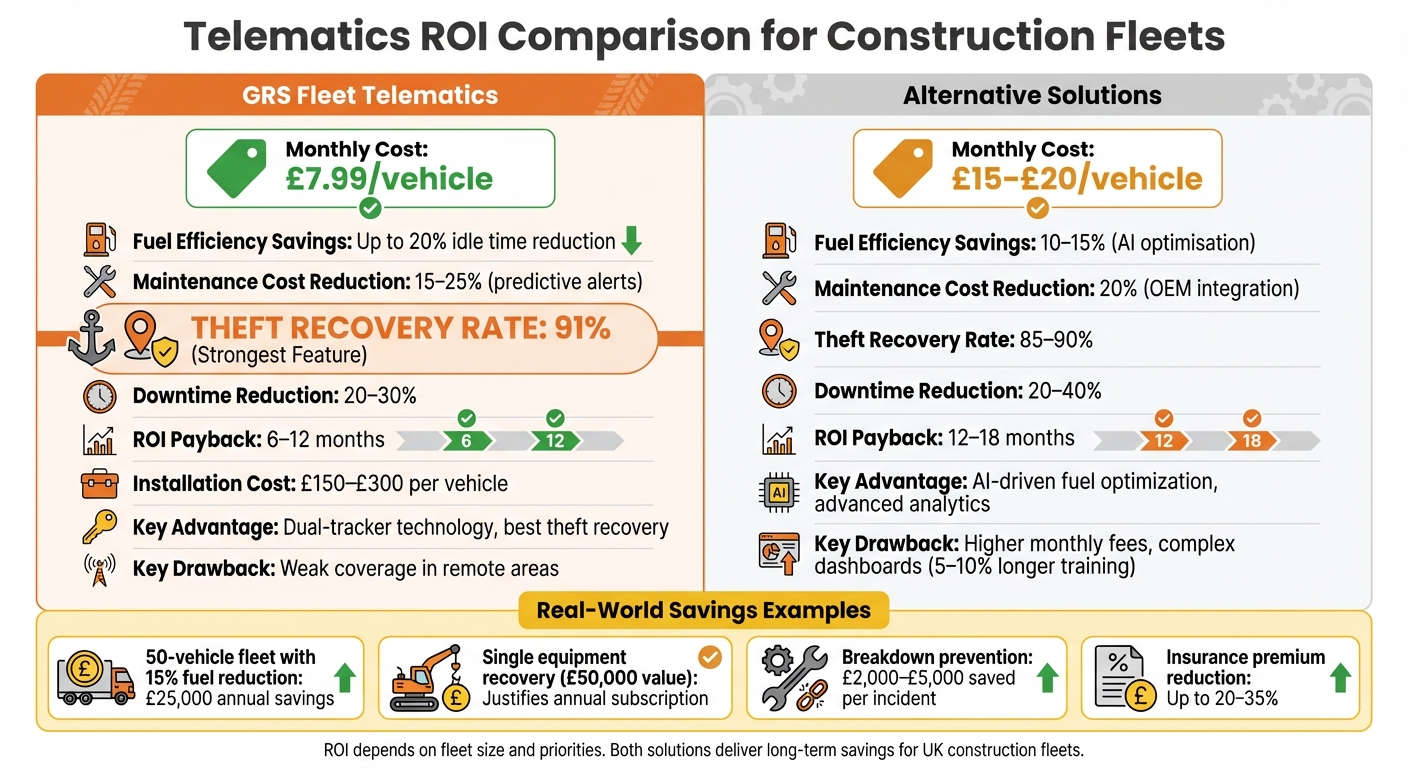
Telematics ROI Comparison: GRS Fleet vs Alternative Solutions for Construction Fleets
To wrap up the ROI analysis, let’s weigh the key cost and performance metrics of telematics solutions. The goal? To find the right balance between cost, features, and return on investment.
GRS Fleet Telematics boasts an impressive 91% theft recovery rate, with subscription costs starting at £7.99 per month. However, the upfront installation fees - ranging from £150 to £300 per vehicle - might be a hurdle for smaller fleets. Its dual-tracker technology offers strong security, but reliability can falter in remote construction areas where mobile network coverage is weak.
On the other hand, alternative platforms using AI-driven optimisation promise fuel savings, particularly for diesel vehicles, and can help lower maintenance costs through OEM integrations. Yet, these platforms come with higher monthly fees (£15–£20 per vehicle) and slightly lower theft recovery rates (85–90%). Additionally, their complex dashboards could extend training times by 5–10%, adding to the initial learning curve.
Here’s a side-by-side comparison of how these solutions stack up in critical cost and ROI areas:
| Solution Type | Fuel Efficiency Savings | Maintenance Cost Reduction | Theft Recovery Rate | Downtime Reduction | Monthly Cost | ROI Payback |
|---|---|---|---|---|---|---|
| GRS Fleet Telematics | Up to 20% idle time reduction | 15–25% (predictive alerts) | 91% | 20–30% | £7.99/vehicle | 6–12 months |
| Alternative Solutions | 10–15% (AI optimisation) | 20% (OEM integration) | 85–90% | 20–40% | £15–£20/vehicle | 12–18 months |
What does this mean for ROI? It depends on your fleet size and priorities. For example, a 50-vehicle fleet cutting fuel consumption by 15% could save around £25,000 annually. Recovering a single £50,000 piece of equipment or avoiding a breakdown costing £2,000–£5,000 could easily justify the subscription costs. Moreover, for theft-prone sites, insurance premiums might drop by 20% or more, adding further savings.
However, there are challenges to consider. All solutions require upfront investment and a learning curve. Installation time, driver training, and integration with existing machinery can add complexity. For GRS, compatibility issues with non-standard equipment might demand custom adaptations, while the higher monthly fees of alternatives can eat into long-term savings despite their advanced features.
Ultimately, the best choice comes down to your fleet’s needs. Whether you prioritise security, cost efficiency, or advanced analytics, the right solution will depend on your operational goals and fleet size.
Conclusion
For construction fleets in the UK, telematics offers tangible benefits, with many fleet managers seeing a full return on investment within 6–12 months. The savings are clear: lower fuel costs and reduced unplanned downtime lead to noticeable operational cost reductions.
The best telematics solution depends on your specific needs. If theft prevention is a priority, discrete, battery-powered trackers are a solid choice, as they remain operational even when disconnected. For those mindful of budgets, starting with a pilot programme focused on your most-used equipment - like tippers or excavators - can help prove the value of telematics before rolling it out across your fleet. In cities like London or Manchester, video telematics can cut insurance claims and improve driver behaviour by up to 50%.
Choosing the right hardware is just as important. Hard-wired trackers suit vehicles like vans and HGVs that require constant data tracking, while battery-powered devices are better for non-powered assets. For mixed fleets, platforms that integrate data from various device types into a single dashboard simplify management and boost visibility across owned and hired equipment.
Hardware decisions also shape how you measure success. Setting clear KPIs - such as fuel consumption targets, theft incidents, or equipment utilisation rates - helps track performance. For example, improving asset utilisation from 60% to 85% can reduce reliance on short-term hires. With GRS Fleet Telematics offering subscriptions starting at £7.99 per vehicle per month and a 91% theft recovery rate, establishing clear benchmarks ensures you see value quickly.
FAQs
What KPIs should I track to prove telematics ROI?
To show the return on investment (ROI) for telematics, focus on tracking critical metrics. These include fuel savings, vehicle utilisation, driver behaviour (such as harsh braking or speeding), maintenance costs, vehicle recovery rates, and compliance metrics. Monitoring these factors provides a clear picture of cost reductions and improvements in your fleet's operational efficiency.
How do I choose between hard-wired and battery-powered trackers?
When choosing a tracker, think about security, reliability, and installation requirements.
Battery-powered trackers are a budget-friendly option, typically priced between £20 and £100. They’re easy to install and work well for smaller fleets. However, they’re less secure and might not meet the standards required by insurance providers.
On the other hand, hard-wired trackers come at a higher cost, ranging from £200 to £600 (including installation). These require professional fitting but offer stronger security, are harder to tamper with, and may even qualify you for insurance discounts.
Your decision should align with your fleet’s size, available budget, and how much emphasis you place on security.
What’s the best way to run a telematics pilot on a construction fleet?
To get started with a telematics pilot for your construction fleet, the first step is selecting a system that includes GPS tracking, sensors, and security features suited to your specific equipment. Next, set clear goals - whether that's cutting down idle time, improving fuel efficiency, or boosting security measures.
Once you've got your objectives in place, equip a representative sample of your fleet with the devices. Over a period of 3–6 months, track important metrics like fuel consumption, vehicle health, and operational efficiency. At the end of the trial, review the data to evaluate improvements, cost reductions, and return on investment. If the results are promising, you can then consider rolling the system out across the entire fleet.