
Telematics Insights: Improving Driver Performance
Michael Bar
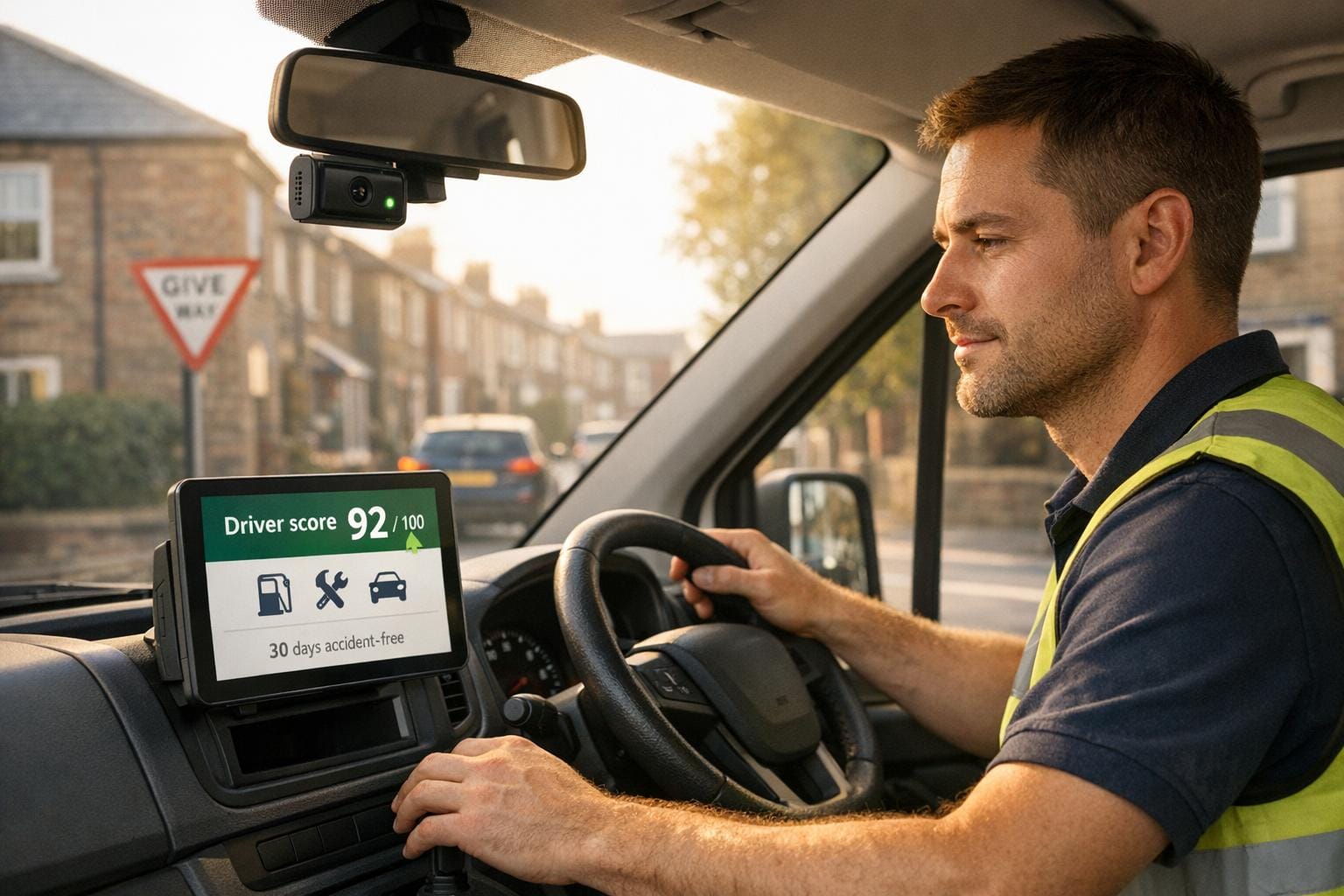
Driver behaviour accounts for 90% of road crashes in UK fleet operations. Telematics systems are transforming fleet safety and efficiency by monitoring driving habits, providing real-time feedback, and enabling targeted coaching. Here's what you need to know:
- Safety Improvements: Fleets using telematics report 20–35% fewer preventable accidents and a 35% reduction in major violations with coaching programmes.
- Cost Savings: Annual savings range from £3,000 to £5,800 per vehicle, with fuel costs reduced by 15–25% and maintenance expenses cut by 15–20%.
- Advanced Features: AI dashcams detect distractions and fatigue with over 90% accuracy, while predictive maintenance reduces unplanned downtime by 25–30%.
- Driver Engagement: Real-time alerts and gamified scorecards help drivers self-correct, improving behaviours like speeding, harsh braking, and idling.
With telematics starting at just £7.99 per vehicle per month, UK businesses can boost safety, lower costs, and optimise fleet performance. The future of fleet management lies in using data to make smarter, safer decisions.
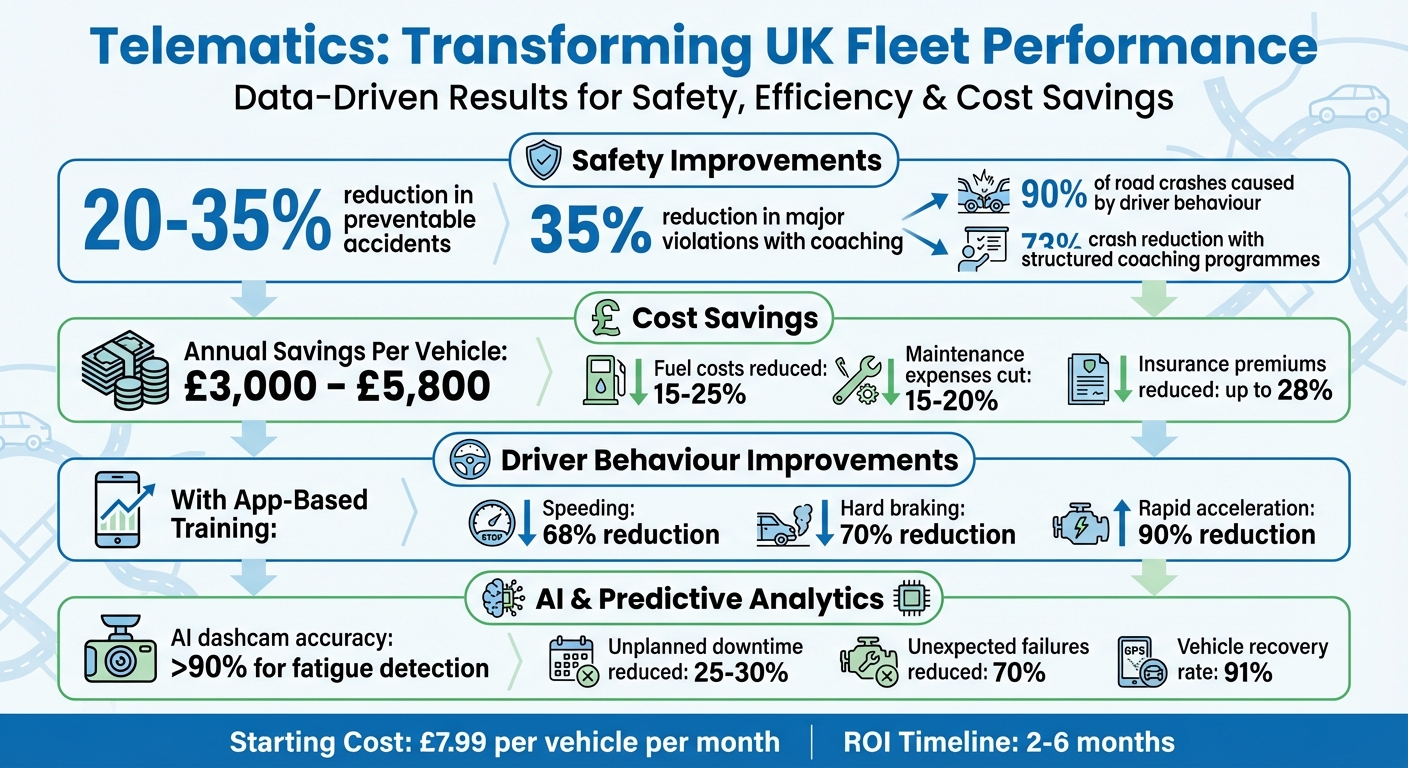
Telematics Impact on UK Fleet Safety and Cost Savings
How Large Fleets Actually Use Telematics to Improve Driver Safety
How Telematics Monitors and Improves Driver Behaviour
Telematics systems work by collecting data through van tracker systems using GPS, accelerometers, and onboard sensors connected to a vehicle's OBD-II port. This setup provides a detailed look at driver behaviour, capturing actions like speeding, harsh braking, rapid acceleration, sharp cornering, and even distracted driving. The information gathered is then transformed into actionable insights for fleet managers, offering a solid foundation for monitoring and improving driver habits.
Today's systems go beyond basic tracking. AI-powered dashcams, for instance, can now detect distractions - such as mobile phone use - and signs of fatigue, like microsleep, with impressive accuracy. They achieve 99.9% precision for harsh events and over 90% for predicting fatigue. These advanced neural networks analyse more than 17 different indicators simultaneously, identifying risks like tailgating or seatbelt violations even before incidents occur. This shift from reactive to proactive safety measures has redefined how fleets manage driver behaviour.
Real-Time Tracking of Driving Habits
Modern telematics systems not only collect data but also provide real-time feedback to drivers. Using in-cab alerts, such as audio warnings or visual cues, these systems prompt drivers to self-correct instantly. For example, if a driver exceeds the speed limit or brakes harshly, they receive immediate feedback, enabling them to adjust their behaviour on the spot. This method, known as Tier 1 self-coaching, only involves management if poor driving patterns persist.
The results speak for themselves. Pilots using app-based training have shown remarkable improvements: a 68% reduction in speeding, a 70% drop in hard braking, and a 90% decrease in rapid acceleration. One study highlighted that the worst drivers in a fleet generated 17 times more risk events than the best. However, after four months of using AI dashcams with in-cab coaching, this gap reduced to just four times, proving how targeted feedback can significantly improve high-risk behaviour.
Driver Safety Scorecards and Performance Benchmarks
Safety scorecards compile various metrics - such as speeding, braking, acceleration, idling, and compliance - into a single performance score. This score helps benchmark drivers against fleet averages or industry standards. When paired with coaching, these scores typically improve by 20–30%, with some comprehensive programmes achieving a 35% reduction in major violations through predictive analytics. AI also helps contextualise events, providing clearer insights for improvement.
Gamification has emerged as an effective way to keep drivers engaged. By creating league tables that reward top performers or those showing significant improvement, fleets can achieve engagement rates of up to 85%. Among 100,000 drivers in US usage-based insurance programmes, the riskiest but most engaged drivers improved their distracted driving by 20%, hard braking by 9%, and speeding by 27% over three months. These improvements potentially reduced bodily injury claims by 5.5%. Adding video footage to scorecards further enhances fairness, as it helps distinguish between reckless behaviour and necessary actions, such as braking to avoid a pedestrian. This ensures more accurate assessments and better-targeted training.
Fuel Efficiency and Cost Reduction Through Telematics
Improving how drivers operate vehicles doesn't just boost safety - it also leads to serious cost savings. For UK businesses, fuel expenses typically make up 25–30% of total fleet operating costs, making it a key area for cost control. Telematics systems help by addressing inefficient driving habits. For instance, hard acceleration can increase fuel consumption by as much as 40%, and excessive idling burns through a gallon of fuel every hour. Across an entire fleet, these behaviours can add up to significant costs - but also present huge opportunities for savings.
Fleets using telematics have reported fuel cost reductions of 15–25% within six months. These savings come from tools like real-time idle monitoring, route planning, and targeted driver coaching. For a fleet spending £100,000 a year on fuel, this could mean saving £15,000–£25,000 in the first year alone. Additionally, predictive maintenance systems, which combine sensor data with machine learning, can cut unexpected downtime by 25–30% and lower maintenance costs by 15–20%. When you add potential insurance premium reductions of up to 28%, the financial benefits can often cover the cost of telematics systems within the first year. This creates a solid foundation for implementing eco-driving strategies.
Eco-Driving Analytics and Fuel Optimisation
Telematics doesn’t stop at general savings - it goes further with eco-driving analytics to fine-tune fuel efficiency. These systems constantly analyse driving patterns to highlight behaviours that waste fuel. By drawing on data from GPS, speed monitoring, idle time, engine diagnostics, and driver actions, telematics pinpoints inefficiencies. This helps fleet managers focus their coaching on the drivers who are responsible for the most fuel waste - typically the bottom-performing 10%.
With telemetry-driven coaching, fuel efficiency improves significantly. Drivers receive real-time in-cab alerts that encourage them to self-correct habits such as aggressive acceleration or excessive idling. Combined with tools like scorecards and league tables that rank driver performance, fleets can create a sense of friendly competition, encouraging drivers to adopt and maintain fuel-efficient behaviours.
Reducing Idling and Unnecessary Fuel Consumption
One of the quickest ways to save fuel is by reducing idling time, and telematics systems excel at this. GPS tracking and behaviour monitoring can detect when engines are left idling unnecessarily, sending alerts when idle time exceeds pre-set limits. This can cut fuel waste by 15–20%, which is especially valuable for fleets making frequent stops in urban areas.
To maximise fuel savings, fleet managers should focus on key metrics: idle time, hard acceleration, excessive speeding, route deviations, and fuel use per mile. Modern telematics platforms also use predictive analytics to link these metrics to fuel costs, helping managers identify the most impactful areas for improvement. Dashboards display individual driver scores alongside fleet-wide benchmarks, making it easy to reward top performers and provide targeted coaching where it’s needed most. With solutions like GRS Fleet Telematics starting at just £7.99 per month, adopting fuel monitoring technology is affordable, and most UK fleets can see a positive return on investment within 2–6 months.
AI and Predictive Analytics for Fleet Safety
AI is reshaping how fleets approach safety and maintenance. Instead of waiting for issues to arise and reacting after the fact, AI-powered telematics systems identify risks as they happen and even predict mechanical failures before they occur. This forward-thinking approach helps reduce disruptions and builds on the driver behaviour analytics mentioned earlier, further boosting overall driver performance.
By merging data from various sources, these systems provide a detailed view of both driver behaviour and vehicle health. Machine learning plays a key role here, distinguishing between normal activity and actual risks. This reduces unnecessary alerts and enables more precise interventions. This detailed perspective also paves the way for advanced tools like AI dashcams.
AI Dashcams for Risk Detection
AI dashcams use computer vision and machine learning to monitor both driver actions and road conditions in real time. These devices can detect behaviours like mobile phone use, smoking, failure to wear seatbelts, and fatigue. With edge computing technology, they process video data locally and issue in-cab voice alerts in as little as 200ms. This quick response time allows drivers to make immediate adjustments. Additionally, the system factors in variables such as weather, traffic, and vehicle load, ensuring that coaching focuses only on behaviours that genuinely increase risk.
Predictive Maintenance to Reduce Downtime
Predictive maintenance is another way AI enhances fleet reliability, working alongside driver monitoring. Telematics platforms analyse real-time engine diagnostics, GPS data, and accelerometer readings to identify potential mechanical issues before they turn into major problems. These systems flag specific maintenance needs - like engine faults or early signs of wear - allowing fleet managers to schedule repairs ahead of time, avoiding unexpected breakdowns.
The benefits of this approach are clear. Fleets using predictive maintenance have seen a 70% drop in unexpected vehicle failures, a 15% reduction in overall maintenance costs, and a 19% decrease in accident-related expenses. This means fewer disruptions, lower repair bills, and more vehicles staying on the road. Many telematics providers offer predictive maintenance alongside AI dashcams, all integrated into a single cloud-based dashboard. These solutions, available for as little as £7.99 per vehicle per month, give fleet managers a complete view of both driver behaviour and vehicle health. At GRS Fleet Telematics, we deliver these cutting-edge AI solutions to improve fleet safety and efficiency, ensuring our UK clients benefit from proactive maintenance and real-time performance insights.
Conclusion: Telematics and the Future of Fleet Management
Telematics has come a long way from simply tracking vehicle locations. Today, it’s a powerful tool reshaping how UK fleets operate. Fleets using AI-powered systems see 20–35% fewer preventable accidents, while structured coaching programmes can cut crashes by up to 73%. These are not just incremental changes - they're substantial improvements in safety and overall performance.
But it’s not just about safety. These advancements also deliver serious financial benefits. For example, fuel efficiency improvements of 15–25% within six months can significantly impact costs, especially when fuel accounts for as much as 30% of operating expenses. Predictive maintenance reduces unplanned downtime by 25–30% and trims maintenance costs by 15–20%. Meanwhile, advanced behaviour tracking can lower insurance premiums by up to 28%. With these savings, many fleets recover the cost of telematics systems in just a few months, with annual per-vehicle savings ranging from £1,900 to £3,600.
These data-driven strategies are revolutionising fleet management. High-performing fleets leverage telematics to avoid the average collision costs of £44,000 per incident. Targeted coaching, informed by precise data, is helping to close the gap between high-risk and top-performing drivers across UK fleets.
At GRS Fleet Telematics, we offer an all-in-one platform that combines real-time monitoring, predictive maintenance, and AI analytics - starting at just £7.99 per vehicle per month. With features like 91% vehicle recovery rates and dual-tracker technology, our solutions provide both operational insights and enhanced security.
The future of fleet management isn’t just about gathering more data - it’s about using that data to make smarter, proactive decisions. By adopting these technologies now, fleets can safeguard their drivers, cut costs, and stay ahead in an industry increasingly driven by data and innovation.
FAQs
What data does a telematics system actually collect about my drivers?
Telematics systems collect detailed information about how vehicles are driven and used. This includes data on speed, acceleration, braking, cornering, idling, and even whether seatbelts are being used. These systems also ensure compliance with UK driving laws, such as adhering to speed limits and avoiding mobile phone use while driving.
With built-in GPS tracking, telematics can optimise routes, prevent theft, and provide real-time location updates. They also keep an eye on vehicle health, monitor battery status for electric vehicles (EVs), and track energy consumption. Altogether, these insights can help enhance safety, lower operational costs, and align with sustainability objectives.
How quickly will I see a return on investment from telematics?
Telematics systems can often pay for themselves within the first year. Research indicates that 41% of fleets experience a return on investment (ROI) within this period. For medium-sized fleets, the savings can exceed £4,800 per month. These benefits stem from smarter route planning, better fuel efficiency, and improved vehicle maintenance. While many fleets realise ROI within 8–12 months, some manage to achieve it in as little as 0.3 months by streamlining operations and cutting down risks.
How do I introduce telematics without upsetting drivers or hurting trust?
To bring telematics into the workplace without causing concerns among drivers, it's key to communicate clearly and transparently. Focus on how telematics can help with compliance, improve safety, and cut costs - benefits that can positively impact everyone involved. Frame it as a tool designed to enhance operations, not as a means of penalising employees.
Getting drivers involved early in the process is crucial. Be upfront about how the data will be used and stress the advantages, such as safer driving conditions and improved efficiency. This open dialogue builds trust and helps ensure telematics is viewed as a supportive measure rather than an intrusive one.