
5 Ways Telematics Improves Fuel Efficiency
Michael Bar
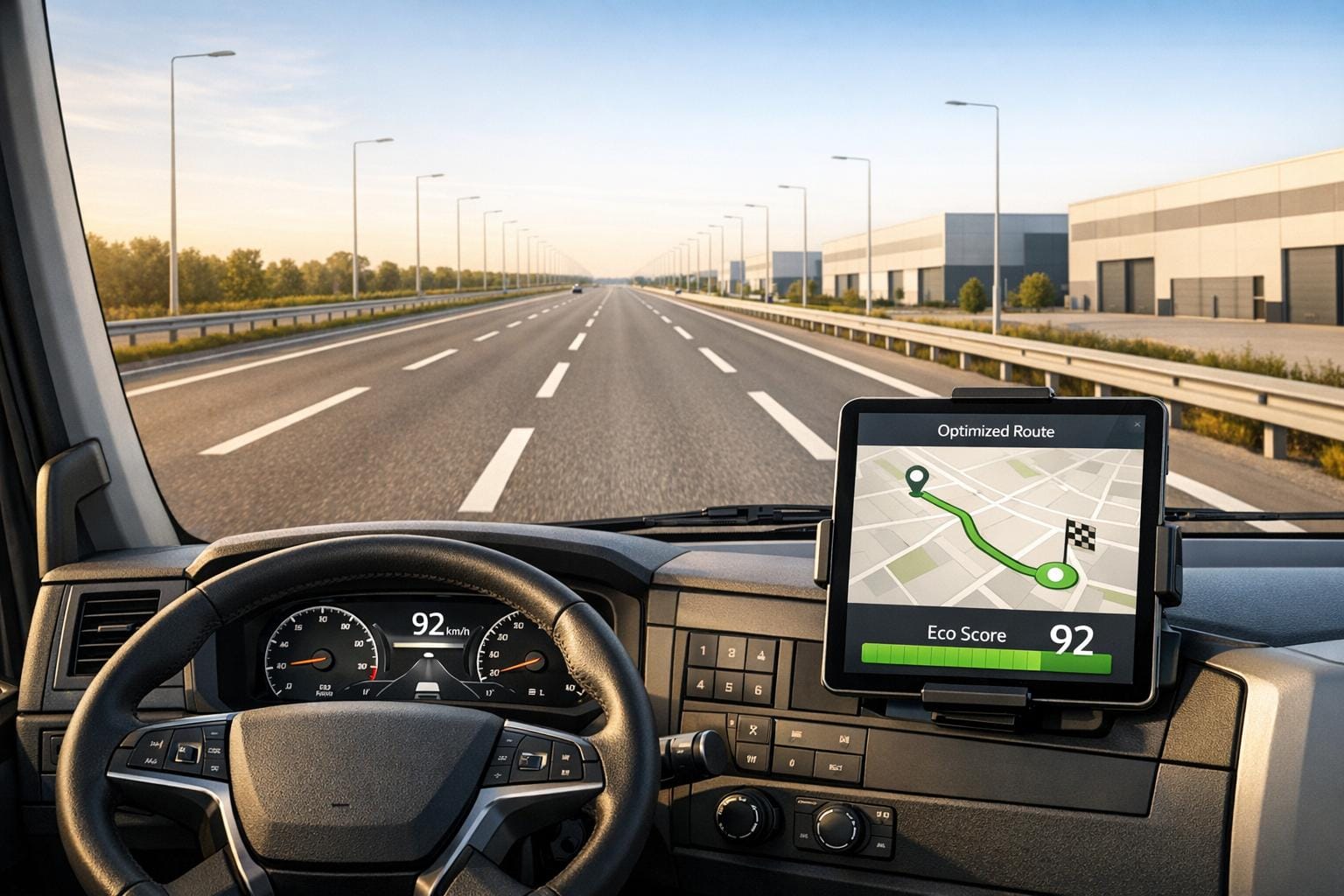
Fuel efficiency is a top concern for UK fleet operators. Telematics offers practical tools to reduce fuel costs by up to 20%, saving thousands annually per vehicle. Here's how it works:
- Route Optimisation: Cuts unnecessary mileage and avoids traffic, reducing fuel consumption by up to 20%.
- Driver Behaviour Tracking: Identifies habits like harsh braking and idling, saving 10–20% on fuel.
- Fuel Usage Analysis: Pinpoints inefficiencies and tracks trends, cutting costs by up to 18%.
- Idling Alerts: Reduces wasted fuel during stops, saving £116 per vehicle annually.
- Predictive Maintenance: Monitors vehicle health to prevent inefficiencies and reduce fuel use by 10%.
Telematics systems start at just £7.99/month, making them accessible for fleets of all sizes. These tools not only save money but also help reduce CO₂ emissions and improve fleet performance.
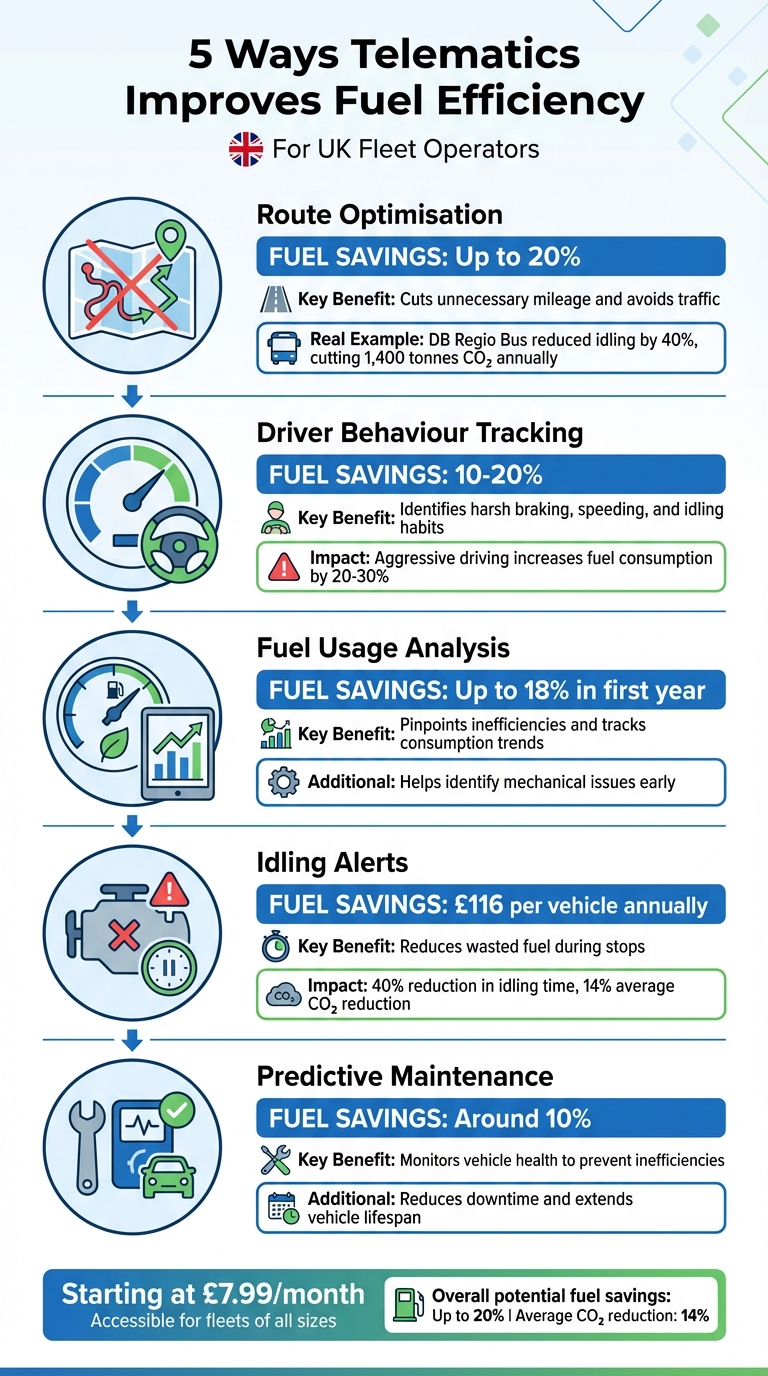
5 Ways Telematics Improves Fuel Efficiency: Savings Breakdown
1. Route Optimisation with Telematics
Impact on Fuel Efficiency
Route optimisation is a powerful way to cut fuel consumption, with studies showing it can lead to savings of up to 20%. By analysing traffic patterns, road conditions, and real-time vehicle data, telematics systems suggest the most fuel-efficient routes, helping avoid congestion and reduce idle times. For example, a delivery company using GPS-based route adjustments managed to lower fuel consumption by over 15% annually.
Cutting out unnecessary detours and excess mileage is crucial. Telematics systems use vehicle location data to help fleet managers avoid traffic hotspots and plan shorter, more efficient routes. A notable example is DB Regio Bus, which reduced idling by 40%, leading to a CO₂ emissions reduction of 1,400 tonnes annually. Even a modest 10% cut in business miles can significantly reduce overall fuel usage.
These savings highlight the practical benefits of telematics, paving the way for more efficient fleet management strategies.
Practical Application and Benefits
Telematics tools bring these fuel-saving opportunities to life by guiding daily routing decisions. These systems integrate with GPS and live traffic data to adjust routes in real time. Dispatchers can track vehicle locations, monitor traffic conditions, and assess load status, ensuring routes are optimised to minimise empty miles and improve load-matching efficiency. Additionally, telematics ensures vehicles stick to the most efficient routes, a task that’s harder to achieve with manual planning. By linking telematics with fuel card data, managers can pinpoint routes that result in higher fuel costs and make adjustments accordingly.
The benefits go beyond fuel savings. Route optimisation reduces vehicle wear and tear, improves delivery times, and enhances driver safety by steering clear of hazardous areas. These operational improvements not only boost performance but also deliver a strong return on investment for businesses.
Cost‑Effectiveness of Telematics Solutions
Telematics solutions prove to be a cost-effective choice for businesses aiming to maintain long-term fuel efficiency. With options like GRS Fleet Telematics offering van tracking from just £7.99 per month, even smaller UK fleets can afford the technology. Installation is straightforward, and cloud-based GPS trackers provide instant access to data. Many businesses experience a quick return on investment, as savings from reduced fuel and mileage costs often outweigh subscription fees. Combined with the potential for 10–20% fuel reductions, telematics solutions make financial sense for fleets of all sizes.
2. Driver Behaviour Tracking and Insights
Impact on Fuel Efficiency
How a driver operates a vehicle has a clear and measurable effect on fuel consumption. Telematics systems are designed to track habits like harsh acceleration, excessive speeding, abrupt braking, and prolonged idling – all of which can lead to increased fuel usage. For instance, aggressive driving behaviours can push fuel consumption up by as much as 20–30% due to inefficient acceleration and braking patterns. Additionally, heavy-duty vehicles can burn up to 3.6 litres of fuel per hour while idling, resulting in considerable wastage over time.
Research highlights that targeted driver coaching can be highly effective, cutting idling time by up to 40% and delivering fuel savings of 10–20%. These figures underline the potential for significant improvements in fleet efficiency through behaviour-focused interventions.
Practical Application and Benefits
Telematics systems transform raw driving data into actionable insights. Fleet managers can review detailed reports on risky driving behaviours, such as hard braking and speeding, and use this information to guide targeted coaching. Driver scorecards, for example, can encourage healthy competition and promote smoother, more efficient driving habits. The benefits extend beyond fuel savings – safer driving reduces accident rates, decreases vehicle wear and tear, lowers insurance costs, and ensures compliance with regulatory standards.
Ease of Implementation for Businesses
Introducing driver behaviour tracking is straightforward for fleets across the UK. Most systems require simple installations, such as plug-in trackers or black box devices, which provide real-time performance data accessible via web browsers or mobile apps. For instance, GRS Fleet Telematics offers an affordable solution starting at £7.99 per month. Their setup includes dual-tracker technology and boasts a 91% stolen vehicle recovery rate. With minimal technical know-how needed, these cloud-based systems allow fleet managers to quickly access driver performance data and roll out effective coaching programmes with ease.
3. Fuel Usage Analysis for Cost Management
Impact on Fuel Efficiency
Fuel usage analysis takes the insights gained from tracking driver behaviour and dives deeper into consumption patterns, offering a data-driven approach to managing costs. This method doesn’t just focus on routes or driving habits; it provides a complete picture of how each vehicle performs.
With telematics systems, live fuel consumption data highlights areas like idling, inconsistent speeds, and inefficient routes. Combined with driver behaviour tracking, this data can pinpoint inefficiencies, potentially cutting fuel costs by up to 20%. On the flip side, aggressive driving habits can increase fuel consumption by as much as 30%.
But it’s not just about wasteful habits. Analysing fuel usage can also uncover mechanical issues early. For instance, a sudden drop in fuel efficiency might indicate engine trouble or the need for maintenance. Addressing these problems promptly can help avoid expensive breakdowns and keep vehicles running smoothly.
Practical Application and Benefits
Fleet managers can utilise dashboards that consolidate key metrics like miles per gallon (MPG) for each vehicle, idle times for specific routes, and overall fuel consumption trends. These tools not only help benchmark vehicle performance but also set clear efficiency goals. Automated reporting further simplifies the process, cutting down on manual errors and freeing up time for more strategic tasks.
Fuel data can also be used to rank driver performance and introduce rewards for eco-conscious driving. This gamified approach encourages friendly competition among drivers while promoting fuel-efficient habits. Regular reviews of fuel and route data help fleets adapt to evolving traffic conditions or infrastructure changes, ensuring continuous improvements. These detailed insights don’t just guide daily operations - they form the backbone of long-term cost-saving strategies.
Cost-Effectiveness of Telematics Solutions
By leveraging fuel data strategies, businesses can trim operational costs by as much as 18% within the first year. For companies in the UK, this means significant savings, especially given the volatility of diesel and petrol prices. Beyond cost savings, this analysis supports sustainability efforts, helping businesses cut their carbon emissions and meet environmental regulations.
Fuel consumption data also helps determine the right time to transition to alternative fuel vehicles or hybrids, which could lead to fuel savings of 25% to 50%. Additionally, these insights pave the way for predictive maintenance plans, boosting overall efficiency and reducing downtime across the fleet.
4. Reducing Idling Time with Alerts
Impact on Fuel Efficiency
Idling alerts are a key part of telematics strategies aimed at improving fuel efficiency. Idling - when a vehicle's engine runs while stationary - is a major contributor to fuel waste in fleet operations. Telematics systems use GPS and onboard sensors to monitor engine activity, identifying periods of idling and sending real-time alerts to drivers or fleet managers. These alerts encourage drivers to switch off the engine during extended stops.
This approach can lead to notable savings. For instance, actively addressing excessive idling can save around £116 per vehicle annually. Additionally, better driving habits, including reduced idling, can result in overall fuel savings of 10–15%. In one example, a fleet managed to cut idling by 40% within a year, significantly lowering both fuel costs and CO₂ emissions.
Ease of Implementation for Businesses
The good news is that setting up idling alerts is straightforward and highly effective. Many telematics providers, such as GRS Fleet Telematics, offer van tracking solutions for your industry via plug-and-play devices that integrate easily with existing fleet management systems. Once installed, features like driver notifications can be operational within days, ensuring minimal disruption to daily operations.
Alerts can be delivered in a variety of ways, including in-cab notifications, mobile apps, or dashboards. Fleet managers can customise thresholds, such as triggering alerts after five minutes of idling, to prompt drivers to take action. The data collected also feeds into driver behaviour tracking systems, enabling targeted coaching on eco-friendly driving techniques.
Practical Application and Benefits
Reducing idling doesn’t just cut fuel costs; it offers other important advantages. Shorter engine run-times mean lower greenhouse gas emissions, with average CO₂ reductions of around 14%. It also reduces engine wear, potentially extending vehicle lifespans. Many fleets use idling data alongside driver scorecards to create reward programmes, encouraging friendly competition and reinforcing fuel-saving habits.
With telematics solutions available from as little as £7.99 per month, fleets can quickly see a return on investment while adopting more sustainable practices.
5. Predictive Maintenance for Efficient Operations
Impact on Fuel Efficiency
Predictive maintenance takes vehicle health management to a new level by using telematics to monitor performance data in real time. Key metrics like engine diagnostics, oil levels, tyre pressure, brake wear, and temperature are tracked continuously, with alerts sent to managers when potential problems arise [1, 5, 18]. For example, addressing issues like underinflated tyres or a misfiring engine early ensures vehicles operate at peak efficiency, reducing unnecessary fuel consumption.
Over time, telematics data can uncover efficiency trends, such as gradual tyre pressure drops that impact both immediate fuel use and long-term operational costs. Studies indicate that predictive maintenance powered by telematics can lead to average fuel savings of around 10%. This proactive maintenance strategy works hand-in-hand with other telematics tools to enhance overall fleet performance.
Ease of Implementation for Businesses
For UK businesses, adopting predictive maintenance through telematics is simple, as explained in our fleet telematics FAQ. Modern systems are designed for easy integration using plug-and-play devices like GPS trackers or OBD-II units [1, 5]. With cloud-based dashboards, fleet managers can receive instant alerts and monitor vehicle health without the need for complex IT setups.
Providers like GRS Fleet Telematics offer advanced solutions starting at just £7.99 per month. These systems automatically generate alerts when performance metrics indicate potential issues, allowing for timely interventions. By focusing on the vehicle's actual condition rather than relying on arbitrary maintenance schedules, businesses can shift from reactive repairs to planned, efficient servicing [10, 13].
Practical Application and Benefits
Once implemented, predictive maintenance offers more than just fuel savings. It reduces vehicle downtime, extends the lifespan of fleet assets, and supports compliance with UK emissions standards [5, 8, 12]. Real-time alerts help fleets avoid costly breakdowns, while proactive tyre pressure monitoring and replacement scheduling boost fuel efficiency and minimise disruptions.
The financial benefits are clear. With 10–15% savings on fuel costs, lower repair expenses, and longer vehicle lifespans, many fleets find their telematics systems pay for themselves within months [1, 26]. For instance, one fleet reported significant cost reductions by resolving issues before they became major problems, leading to improved fuel usage and increased vehicle uptime [5, 18]. This data-driven approach to maintenance fits seamlessly into broader fleet management strategies, integrating telematics with other systems to provide automated alerts and promote efficiency [9, 12].
Samsara Telematics: Fuel & Energy, Electric Vehicles, EcoDriving
Conclusion
Telematics offers UK businesses a practical way to cut fuel costs and improve fleet performance by leveraging tools like route planning, driver behaviour insights, fuel consumption analysis, idling alerts, and predictive maintenance. These strategies can reduce fuel usage by up to 20% - a figure backed by examples from DB Regio Bus and a UK delivery company.
Beyond saving money, telematics supports cleaner operations by helping fleets cut CO₂ emissions by an average of 14%. Optimising routes, reducing idling, and maintaining vehicles proactively not only align with UK emissions standards but also contribute to a greener future.
From a financial perspective, the benefits are hard to ignore. Fuel savings of 10–20%, lower repair bills, and longer vehicle lifespans mean that many businesses see their telematics investment pay off in just a few months. Added perks like reduced downtime, safer drivers, and better asset security further enhance fleet efficiency.
For as little as £7.99 per month, UK businesses can utilise GRS Fleet Telematics' advanced van tracking solutions. With dual-tracker technology boasting a 91% recovery rate for stolen vehicles, along with tools to monitor routes, driver habits, and maintenance, the system covers all five fuel-saving methods discussed here.
Telematics isn’t simply about cutting costs - it’s about creating fleets that are efficient, environmentally responsible, and competitive. No matter the size of your fleet, telematics can transform the way you operate.
FAQs
How quickly will telematics pay for itself in my fleet?
Telematics can often cover its own costs surprisingly quickly, though this depends on several factors like the size of your fleet, current inefficiencies, and the specific system you choose. In the UK, many fleets experience a return on investment within 8–12 months, and in some cases, it can be as fast as 0.3 months.
The savings come from areas like fuel efficiency (reductions of up to 10–15%), lower maintenance expenses, and additional perks such as theft prevention and better driver behaviour. With prices starting from just £7.99 per vehicle per month, the benefits often outweigh the costs in a short amount of time.
What data do I need to start improving fuel efficiency with telematics?
To get better fuel efficiency using telematics, focus on gathering data like vehicle location, real-time diagnostics, and fuel usage. Key metrics to track include miles per gallon (MPG), fuel wasted during idling, and fuel purchase logs. Keeping an eye on driver behaviour - such as speeding, harsh braking, and excessive idling - is equally important. Analysing this information enables smarter route planning, timely maintenance, and eliminating inefficiencies, all of which contribute to improving fuel efficiency.
Will my drivers accept behaviour tracking and idling alerts?
When introducing behaviour tracking and idling alert systems to drivers, how you communicate their purpose makes all the difference. Being upfront about the goals - like boosting safety, minimising risks, and saving costs - can set the right tone. It's also crucial to provide clear explanations, proper training, and use positive reinforcement to encourage buy-in.
For example, tools like driver scorecards can be highly effective. But their success depends on framing them correctly. Instead of presenting them as a way to punish mistakes, position them as part of a collaborative effort to build a safer and more supportive work environment. This approach can motivate drivers to improve while fostering trust in the system.