
Telematics Data in Predictive Maintenance
Michael Bar

Vehicle breakdowns cost time and money - but telematics offers a better way. By using real-time data from vehicles, fleet managers can predict and prevent failures before they happen. This approach saves costs, reduces downtime, and improves efficiency. Here's how:
- What are Telematics Solutions? It's real-time data from vehicle sensors, tracking metrics like fuel use, engine health, tyre pressure, and driver behaviour.
- Predictive Maintenance: AI analyses this data to detect early signs of wear, helping fleets schedule repairs before breakdowns occur.
- Savings: Predictive maintenance cuts emergency repair costs by up to 85%, reduces downtime by 45%, and saves £2,700–£4,800 per vehicle annually.
- Adoption Gaps: While most vehicles now have telematics, only 27% of fleets fully utilise predictive maintenance.
Recent Studies on Telematics in Predictive Maintenance
Market Growth and Telematics Adoption
The fleet management market is growing at a remarkable pace, with projections placing its value at over £21 billion by 2025, expanding at an annual rate of nearly 17%. This growth stems from a shift in maintenance strategies - from reactive fixes to telematics-driven predictive models. These models rely on real-time sensor data and AI to anticipate and address potential failures before they happen.
Despite the rapid adoption of telematics, the numbers reveal an interesting gap: while 90% of vehicles in 2026 are expected to be telematics-enabled, only 27% of fleets are fully leveraging predictive maintenance, and just 32% partially utilise AI. For those embracing predictive maintenance, the benefits are clear. Fleets see a 45% drop in unplanned downtime, saving between £350 and £595 per vehicle per day. Instead of relying on fixed servicing intervals, this approach uses real-time data to assess actual component wear and tear. Key data streams monitored include vibration and acoustic readings, fluid pressures, temperature changes, fuel efficiency, and electrical system health. These trends highlight the growing reliance on advanced AI techniques, explored further below.
AI and Big Data Analytics in Predictive Models
As the market evolves, AI and big data analytics have become central to predictive maintenance advancements. AI models have shown impressive results, achieving an overall failure prediction accuracy of 89% across mixed fleets, with engine systems reaching 91% and brake systems 88%.
Take Meridian Logistics as an example. In March 2026, this company, managing a fleet of 250 vehicles (ranging from Class 6–8 trucks to vans), adopted an AI-powered predictive maintenance system. According to a FleetRabbit case study, the system delivered an 89% accuracy rate in predicting failures, with an average lead time of 14.2 days for necessary repairs. This proactive approach reduced annual breakdowns from 247 to 94 - a 62% decrease. The financial impact? Savings of around £1.1 million in unplanned downtime costs, along with a staggering 797% return on investment, achieved within a payback period of just 41 days.
The sheer volume of data involved is astonishing. A 250-vehicle fleet generates approximately 2.8 billion data points in just 90 days, with sensors capturing metrics every second. AI processes this immense dataset to uncover patterns that traditional, time-based maintenance schedules would likely miss, addressing 67% of condition-based issues. As the FleetRabbit study puts it:
With 14+ days notice, parts are pre-positioned, techs scheduled during slow periods, backups coordinated, customers notified - crises become routine maintenance.
How Telematics Improves Fleet Performance
Reducing Unplanned Downtime
Telematics systems keep a close eye on vehicles by tracking critical metrics like diagnostic codes, engine hours, and oil quality. With machine learning processing this real-time data, potential issues are flagged before they turn into costly breakdowns. Studies suggest this predictive approach can cut unplanned downtime by 8–12% through proactive scheduling.
By monitoring key indicators such as fuel usage, tyre pressure, or brake wear patterns, telematics systems send timely alerts when something seems off. For instance, Penske Truck Leasing's 2024 study revealed that fleets leveraging real-time data for predictive maintenance enjoyed increased uptime and fewer breakdowns. Similarly, research from Micromain highlights how analysing both historical and real-time data can prevent breakdowns by addressing problems early. This forward-thinking strategy not only avoids disruptions but also ensures smoother day-to-day operations.
Improving Fleet Efficiency
Telematics doesn’t just reduce downtime - it also enhances overall efficiency. By tracking metrics like fuel consumption, odometer readings, and vehicle performance, fleets can fine-tune route planning to minimise idle time and cut down on fuel waste. When combined with historical data on routes, weather, and traffic conditions, telematics enables smarter, more strategic decisions.
Maintenance becomes more effective when it’s based on actual vehicle usage rather than rigid schedules. According to Penske's 2024 trends study, 95% of fleets using telematics reported a positive return on investment, thanks to improved data-sharing and integration. Mix Telematics also notes that real-time monitoring helps predict maintenance needs while improving fuel efficiency.
AI takes things a step further by transforming raw data into actionable insights. Machine learning analyses massive datasets to optimise fuel consumption, plan maintenance schedules, and reduce downtime. Positioning Universal points out that this shift from reactive to predictive maintenance is key to driving better fleet performance overall.
AI in Trucking: The Technology Transforming Fleet Operations | B-LOADED
Cost Savings Through Predictive Maintenance
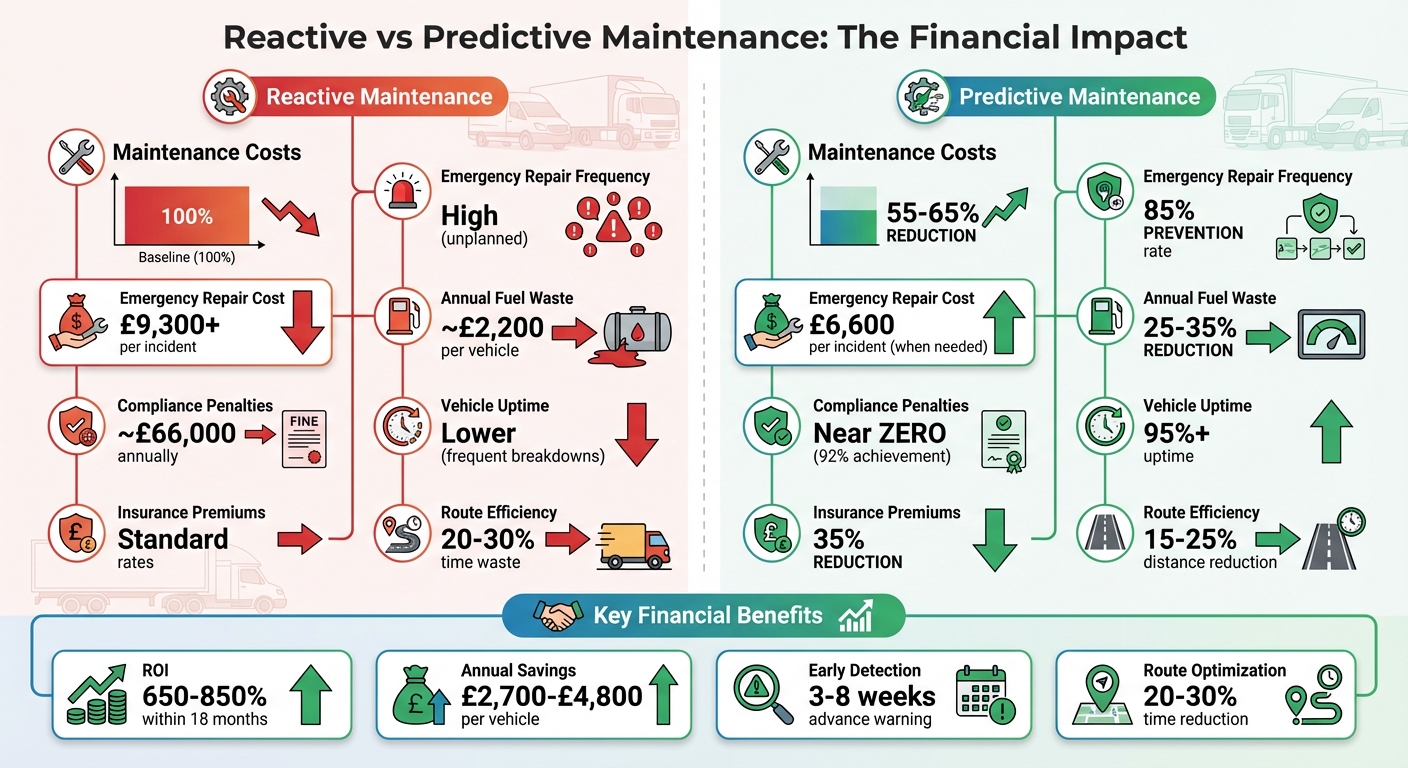
Reactive vs Predictive Maintenance: Cost Savings and Performance Metrics
Telematics-driven predictive maintenance doesn’t just improve fleet performance - it also delivers impressive cost savings.
Measured Savings from Research
Predictive maintenance powered by telematics offers a strong financial upside. Research shows that fleets can achieve an average ROI of 650–850% within 18 months of implementation, with annual savings ranging from approximately £2,700 to £4,800 per vehicle. By spotting potential component failures 3–8 weeks before they occur, fleets can plan repairs ahead of time, avoiding costly emergency fixes. These proactive measures not only cut unplanned downtime but also significantly boost fleet reliability. Maintenance costs drop by 55–65%, while emergency repairs - typically costing around £6,600 per incident - are reduced by 85%. Compare this to reactive maintenance, where emergency repairs can exceed £9,300 per incident.
But it’s not just repair costs. Predictive maintenance also trims other hidden expenses. For example, fuel consumption decreases by 25–35%, saving about £2,200 per vehicle annually. AI-driven route optimisation further reduces travel distances by 15–25% and slashes travel time by 20–30%. Automated compliance monitoring almost eliminates fines, saving fleets around £66,000 per year. Plus, improved safety and compliance measures can cut insurance premiums by as much as 35%.
Before and After Telematics Adoption
The financial and operational benefits of predictive maintenance become clear within 12 to 18 months, with fleets seeing dramatic improvements across key performance metrics:
| Metric | Reactive Maintenance | Predictive Maintenance |
|---|---|---|
| Maintenance Costs | Baseline (100%) | 55–65% Reduction |
| Emergency Repair Frequency | High (unplanned) | 85% Prevention Rate |
| Annual Fuel Waste per Vehicle | ~£2,200 | 25–35% Reduction |
| Compliance Penalties (Annual) | ~£66,000 | Near Zero (92% achievement) |
| Vehicle Uptime | Lower (due to breakdowns) | 95%+ Uptime |
| Insurance Premiums | Standard Rates | 35% Reduction |
| Route Efficiency | 20–30% Time Waste | 15–25% Distance Reduction |
Predictive maintenance also boosts asset value by maintaining detailed service records, making vehicles more appealing in the resale market. Real-time monitoring adds another layer of security by detecting fuel theft and unauthorised vehicle use, helping to recover assets and minimise losses.
GRS Fleet Telematics: A Solution for Predictive Maintenance
Research highlights the financial and operational perks of predictive maintenance for fleet managers in the UK. But how can these benefits be achieved affordably? GRS Fleet Telematics offers a practical solution through its advanced tracking and dual-tracker technology.
Features for Predictive Maintenance
GRS Fleet Telematics supports predictive maintenance with tools designed to improve efficiency and reduce costs. Its real-time tracking provides constant updates on vehicle status, while the dual-tracker technology - available with the Enhanced and Ultimate packages - includes a primary wired tracker and a secondary Bluetooth backup. This dual-layer system ensures a 91% recovery rate for stolen vehicles and maintains data flow even if one tracker fails.
The platform also includes eco-driving analytics, which monitor driver behaviour. By tracking patterns like harsh braking, rapid acceleration, and excessive idling, fleet managers can pinpoint vehicles under stress and drivers whose habits may lead to faster wear and tear. Additionally, features like geofencing and speed monitoring alert managers to unauthorised vehicle use or risky driving behaviours that could indicate mechanical problems. Paired with real-time diagnostics, these tools enable a shift to condition-based maintenance - servicing vehicles based on actual wear rather than fixed schedules.
This proactive approach helps address early warning signs such as unusual vibrations or temperature irregularities, aligning with findings from recent studies on cost reduction and downtime prevention. Combined with competitive pricing, these features make the system an attractive option for fleet managers.
Pricing and Scalability
GRS Fleet Telematics keeps costs manageable with a subscription starting at £7.99 per vehicle per month. This fee covers SIM and data, platform access, and a dedicated account manager. Hardware options are tailored to different needs:
- Essential tracker: £35
- Enhanced package: £79, includes dual-tracker technology
- Ultimate package: £99, adds immobilisation capabilities
For businesses using GRS Fleet Graphics for fleet branding, installation is free when bundled with their services.
This pricing model minimises upfront costs, making it accessible for small and medium-sized enterprises (SMEs). Avoiding just one emergency breakdown - estimated at £3,800 per incident - can offset the system’s cost within months. Additionally, the platform’s scalability allows businesses to expand their fleets without significant financial pressure, making it a suitable choice for operations ranging from a handful of vans to larger commercial fleets.
Conclusion
Key Takeaways
Telematics data has transformed vehicle maintenance, moving from reactive fixes to proactive, data-driven approaches. Studies indicate that real-time monitoring combined with AI analytics can significantly reduce downtime, streamline maintenance processes, and cut costs. With 98% of fleet managers already utilising telematics solutions in some capacity, this technology is no longer a luxury - it's a necessity.
The numbers speak for themselves. Fleets have reported over 40% efficiency improvements, a 23% boost in vehicle maintenance optimisation, and a 15% reduction in refuelling expenses. Transitioning from fixed service schedules to condition-based maintenance not only eliminates unnecessary tasks but also helps detect issues early, preventing costly breakdowns. These financial incentives make telematics particularly appealing for fleet managers across the UK.
For UK fleet managers, the real challenge lies in selecting a telematics solution that offers both advanced features and cost-effectiveness. GRS Fleet Telematics provides an answer with its dual-tracker technology, real-time diagnostics, and eco-driving analytics - all available from just £7.99 per vehicle per month.
The global market reflects this momentum. Automotive telematics subscriptions are expected to hit 528.1 million by 2029, with the market value projected to grow to £170 billion by 2032. With advancements in AI and the rollout of 5G networks enabling faster and more precise data processing, predictive maintenance is set to become even more efficient, offering businesses greater returns on their investments in telematics today.
FAQs
What data do I need for predictive maintenance?
When it comes to predictive maintenance, the focus is on collecting and analysing both real-time and historical vehicle performance data. Key metrics include GPS location, engine diagnostics, and on-board diagnostics (OBD). Specific parameters like engine health, battery status (particularly for electric vehicles), vibration levels, temperature readings, fault codes, and even driver behaviour play a critical role.
By keeping an eye on these factors, it becomes easier to anticipate potential failures, fine-tune maintenance schedules, and tackle problems before they escalate. This approach not only boosts reliability but also minimises breakdowns and helps cut down on repair costs.
How soon can telematics start reducing breakdowns?
Telematics offers a practical way to cut down on breakdowns almost immediately after introducing real-time monitoring and predictive analytics. With these systems in place, you'll likely see benefits such as fewer surprise failures and more efficiently scheduled maintenance during less busy times - often within just a few weeks or months.
How accurate are AI failure predictions in real fleets?
AI systems used in real fleets can predict failures with an accuracy of about 89%. These predictions often provide a warning 2–4 weeks in advance, which plays a crucial role in reducing unexpected downtime and boosting the overall reliability of the fleet.