
Route Optimisation for Low-Emission Deliveries
Michael Bar
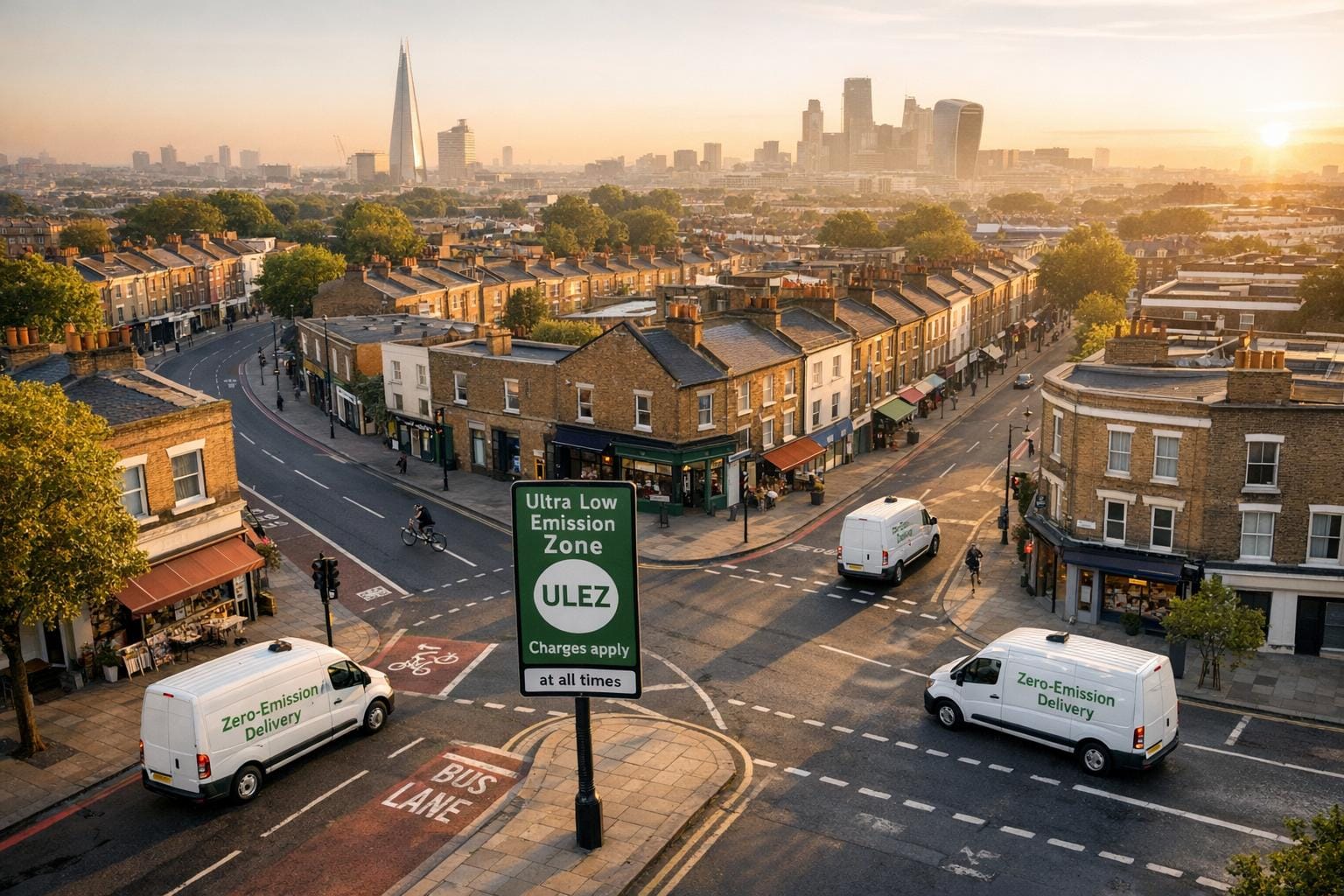
Route optimisation is helping UK delivery fleets cut emissions and improve efficiency. By using AI, real-time GPS, and telematics, companies can reduce fuel use, avoid traffic, and meet tighter regulations like ULEZ. Key methods include:
- AI-powered route planning: Avoid congestion and predict traffic patterns.
- Smart scheduling: Deliver during off-peak hours to save time and fuel.
- Load consolidation: Combine deliveries to reduce trips and emissions.
- Eco-driving analytics: Monitor and improve driving habits to save fuel.
With tools like GRS Fleet Telematics, fleets can track routes, reduce idling, and save costs while lowering their carbon footprint. These systems are reshaping urban logistics, making compliance with emission standards easier and operations more efficient.
What Is Last-mile Delivery Optimization In Sustainable Logistics? - Smart Logistics Network
Urban Delivery Challenges and Emissions
Last-mile deliveries in UK cities come with a hefty environmental cost, especially in areas like London where narrow streets, heavy traffic, and strict time constraints make efficient operations difficult. On average, Londoners lose around 74 hours a year stuck in traffic. All that congestion means engines idle longer, burning more fuel and releasing more emissions into the air.
The growing appetite for same-day and instant deliveries has only made things worse. Before the pandemic, these services were expanding by 36% and 17% annually, respectively, putting more delivery vehicles on the road and stretching traditional logistics systems to their limits. This creates a perfect storm of inefficiency, where driving habits in urban settings directly contribute to higher emissions.
How Traffic Congestion Increases Emissions
Stop-and-go driving in congested areas is a major culprit behind rising emissions. Frequent idling and constant acceleration guzzle fuel and pump out extra CO₂. London, crowned the slowest city to drive in globally, presents a unique challenge for delivery vehicles, which often spend more time crawling through traffic than driving efficiently. This not only hurts the environment but also complicates delivery operations.
Adding to this is the pressure on drivers to meet tight schedules. Professor Peter Jones from UCL highlights the strain:
Van drivers often only have two minutes to make a delivery before risking a PCN fine. This time pressure can be highly stressful – and makes it very difficult to take a toilet break.
Such intense deadlines force drivers to make rushed decisions, leading to more idling and inefficient driving, which in turn increases emissions further.
ULEZ and UK Emission Regulations
On top of these operational hurdles, regulatory frameworks like Ultra Low Emission Zones (ULEZ) are pushing logistics firms to rethink their strategies. These rules are steering companies towards zero-emission solutions, such as electric vans and cargo bikes, which require significant investment in infrastructure and planning. Fleet operators are also turning to microhubs and advanced route optimisation and tracking tools to maintain delivery standards while adhering to these restrictions. These industry-specific tracking solutions help fleets navigate complex urban regulations. These changes are reshaping how urban deliveries are managed, with a strong focus on reducing environmental impact.
Route Optimisation Methods to Cut Emissions
Optimising routes offers a practical way to reduce emissions without needing to replace vehicles outright. With the logistics sector potentially contributing up to 40% of global CO₂ emissions by 2050, improving route efficiency has become a pressing priority for fleet managers. Effective route planning can cut fuel costs by up to 20% while also lowering the environmental impact of operations. Here’s how strategies like real-time data usage, better scheduling, and load consolidation make this possible.
Using Real-Time Traffic Data and AI
AI-powered systems analyse live traffic conditions to steer vehicles away from congested areas, cutting down on idle times. This dynamic routing approach can increase on-time deliveries from 68.1% to an impressive 92.8%, while reducing exposure to traffic congestion by 54.4%. These benefits translate directly into reduced CO₂ emissions, aligning with industry goals for greener operations. Additionally, AI streamlines load planning and carrier selection, ensuring shipments are matched with the most efficient routes and delivery partners.
Scheduling Deliveries for Peak and Off-Peak Times
Adjusting delivery schedules based on traffic patterns further boosts fuel efficiency. Timing is everything - peak travel times in urban areas can extend journey durations by 60–80% compared to off-peak hours, making smart scheduling a key factor in cutting emissions. Delivering during off-peak times not only avoids heavy traffic and ULEZ charges but also allows for smoother, more fuel-efficient driving.
Maximising Vehicle Load and Delivery Sequencing
Combining multiple shipments into a single trip, known as load consolidation, significantly reduces the number of journeys required, cutting fuel use in the process. Choosing the right-sized vehicles for each job ensures efficiency, avoiding unnecessarily high-emission trips. Intelligent delivery sequencing - organising stops in the most logical order - eliminates unnecessary backtracking, saving fuel and reducing "empty miles". For every litre of diesel saved through these measures, around 2.7 kilograms of CO₂ are kept out of the atmosphere. Better sequencing also improves the success rate of first delivery attempts, cutting down on return trips and further lowering emissions. These improvements lay the groundwork for telematics systems to monitor and fine-tune route efficiency over time. Advanced van tracker systems provide the necessary data to monitor these metrics accurately.
How Telematics Supports Low-Emission Route Optimisation
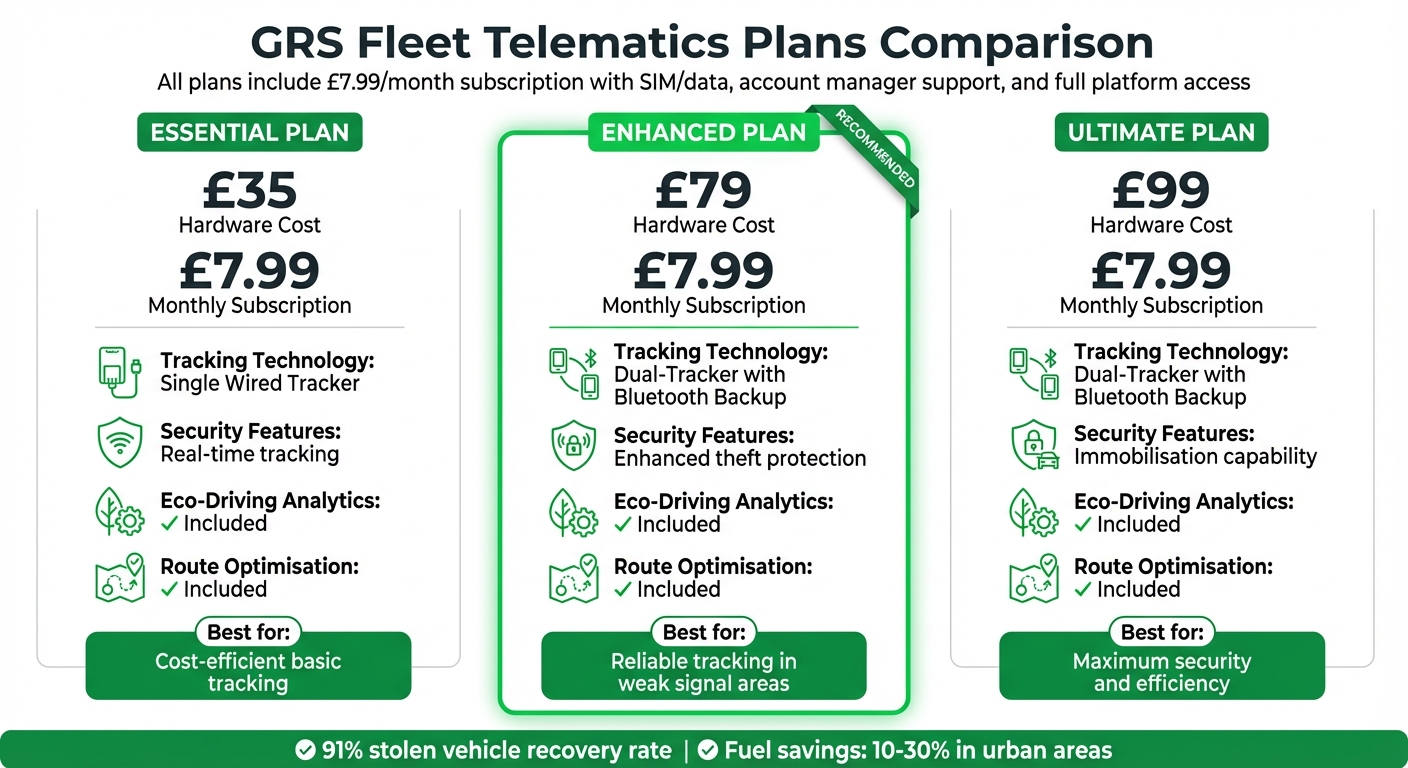
GRS Fleet Telematics Plans Comparison: Essential vs Enhanced vs Ultimate
Fleet telematics plays a crucial role in reducing emissions by enabling smarter, more efficient routes. Through real-time GPS tracking and sensor data, fleets can adjust routes dynamically to avoid congestion and reduce fuel waste. This approach can lead to fuel savings of 10–30%, particularly in busy urban areas and Ultra Low Emission Zones (ULEZ) across the UK. These capabilities align directly with emission reduction strategies, making telematics an essential tool for fleets aiming to meet low-emission targets.
By combining live traffic updates, weather conditions, and vehicle data, telematics systems allow instant rerouting when needed. At the same time, eco-driving analytics monitor key behaviours like acceleration, braking, and idling. This data encourages smoother driving, which helps cut fuel consumption by another 10–20%. Together, these features minimise unnecessary mileage, reduce time spent in traffic, and lower overall carbon emissions - critical for ULEZ compliance and broader environmental goals.
GRS Fleet Telematics: Features and Benefits
GRS Fleet Telematics offers a comprehensive solution tailored for UK fleets, especially those navigating urban environments. Its real-time tracking capabilities remain reliable even in areas with poor GPS coverage, thanks to dual-tracker technology. This ensures uninterrupted rerouting based on traffic conditions, helping to reduce delays and fuel consumption. Additionally, the system boasts an impressive 91% success rate in theft recovery.
The platform's eco-driving analytics provide actionable insights by scoring driver efficiency and promoting fuel-saving habits. For example, Metro Logistics saw remarkable results after adopting GRS Fleet Telematics. Fleet Manager Robert Jenkins discovered that 28% of the company’s fuel was wasted due to inefficient driving and idling. By implementing the system’s eco-driving programme and optimising routes, the company reduced its carbon footprint by 34% and saved over £45,000 annually in fuel costs.
"GRS Fleet Telematics has transformed our sustainability efforts. Their tracking system identified that 28% of our fuel was being wasted through inefficient driving and excessive idling. After implementing their eco-driving programme and offsetting our remaining emissions through Furthr, we've cut our carbon footprint by 34% while reducing fuel costs by over £45,000 annually." – Robert Jenkins, Fleet Manager, Metro Logistics
GRS Fleet Telematics Plans Comparison
GRS Fleet Telematics offers three hardware options, all paired with a £7.99-per-month software subscription. This subscription includes SIM/data, account manager support, and full access to the platform. Each plan is designed to meet different operational needs:
- The Essential plan (£35 hardware) provides a single wired tracker for cost-efficient real-time tracking and basic route visibility.
- The Enhanced plan (£79 hardware) includes dual-tracker technology with Bluetooth backup, ensuring reliable tracking and rerouting in areas with weak signals.
- The Ultimate plan (£99 hardware) features dual-trackers with immobilisation capabilities and advanced eco-driving analytics for maximum security and efficiency.
All plans come with integrated route optimisation and eco-driving analytics, supporting efforts to cut emissions by leveraging live traffic data. The choice between plans depends on factors like fleet security needs and the complexity of urban delivery routes. Fleets operating in heavily congested areas or ULEZ zones often benefit most from the Enhanced or Ultimate plans.
| Feature | Essential Plan | Enhanced Plan | Ultimate Plan |
|---|---|---|---|
| Hardware Cost | £35 | £79 | £99 |
| Monthly Subscription | £7.99 | £7.99 | £7.99 |
| Tracking Technology | Single Wired Tracker | Dual-Tracker (Bluetooth Backup) | Dual-Tracker (Bluetooth Backup) |
| Security Features | Real-time tracking | Enhanced theft protection | Immobilisation |
| Eco-Driving Analytics | Included | Included | Included |
| Route Optimisation | Included | Included | Included |
Measuring Emission Reductions and Cost Savings
To understand the benefits of route optimisation, it’s essential to track fuel consumption and carbon emissions with precision. Telematics systems make this easier by gathering real-time data directly from vehicle engines. These systems provide key metrics like miles per gallon (MPG) and fuel usage, giving fleet managers van tracking and fuel analytics to evaluate performance across various routes, drivers, and vehicle types.
Another advantage of telematics platforms is their ability to showcase progress. By setting a baseline before implementing optimised routing and then monitoring the results, fleet managers can clearly observe reductions in fuel consumption and emissions. This data forms the foundation for ongoing fuel efficiency tracking.
Monitoring Fuel Efficiency and Carbon Emissions
Once baseline data is established, continued monitoring helps fine-tune strategies for managing fuel use and emissions. Fleet emissions typically fall into three categories, or scopes. Scope 1 includes direct emissions from vehicles owned or leased by the company. Scope 2 covers indirect emissions from electricity used to charge electric vehicles. Scope 3 accounts for emissions across the broader supply chain. For most delivery fleets, the largest contributor to carbon output is Scope 1.
Conclusion: The Future of Low-Emission Fleet Management
For UK fleets grappling with stricter emission standards like ULEZ and rising fuel prices, route optimisation has become a necessity. By leveraging AI-powered routing, real-time traffic updates, and efficient scheduling, fleets can minimise unnecessary mileage, cut down on idling, and reduce carbon emissions. These measures don't just help the environment - they also lower operational costs and ensure more reliable delivery times, which boosts customer satisfaction.
Telematics takes these benefits even further. Platforms like GRS Fleet Telematics offer real-time tracking and actionable data insights, allowing businesses to monitor fuel usage, adjust routes dynamically, and identify areas for improvement. With pricing starting as low as £7.99 per month and an impressive 91% stolen vehicle recovery rate, this solution is accessible to businesses of all sizes across the UK.
Looking ahead, advancements in predictive analytics and automated routing are set to transform urban logistics even further. These technologies empower fleets to stay compliant with evolving regulations while keeping costs manageable. By integrating planning and tracking tools, businesses can establish a solid foundation for efficient and sustainable delivery operations.
For UK companies, adopting these solutions isn't just about meeting emission standards - it's about staying competitive in a market where sustainable practices are increasingly expected. As regulations tighten and customer demand for greener operations grows, integrated route optimisation and telematics are becoming essential for long-term success in urban delivery. Together, they represent the future of efficient, low-emission fleet management.
FAQs
What data do I need to start route optimisation?
To start with route optimisation, it's crucial to gather accurate data. This includes details like delivery locations, traffic conditions, vehicle specifications, weather updates, and road conditions. Having precise and up-to-date information - such as real-time traffic data and an understanding of vehicle capabilities - plays a key role in planning efficient routes and cutting down emissions.
How can I prove route optimisation cut CO₂ emissions?
Efficient route optimisation can show measurable reductions in CO₂ emissions when comparing data from before and after its implementation. By employing strategies such as better route planning, cutting down on unnecessary mileage, and adapting routes in real time based on traffic or weather conditions, emissions and fuel consumption can be significantly lowered. In fact, fleet management systems have reported emission reductions of up to 35% and fuel savings of around 15%, providing clear evidence of both environmental and financial advantages.
Will optimised routes still meet tight delivery windows?
Optimised routes can help meet tight delivery schedules by adjusting in real-time to factors like traffic, weather, and road conditions. This not only ensures timely deliveries but also contributes to lowering emissions and improving efficiency.