
5 Benefits of RFID Driver ID Systems for Fleets
Michael Bar
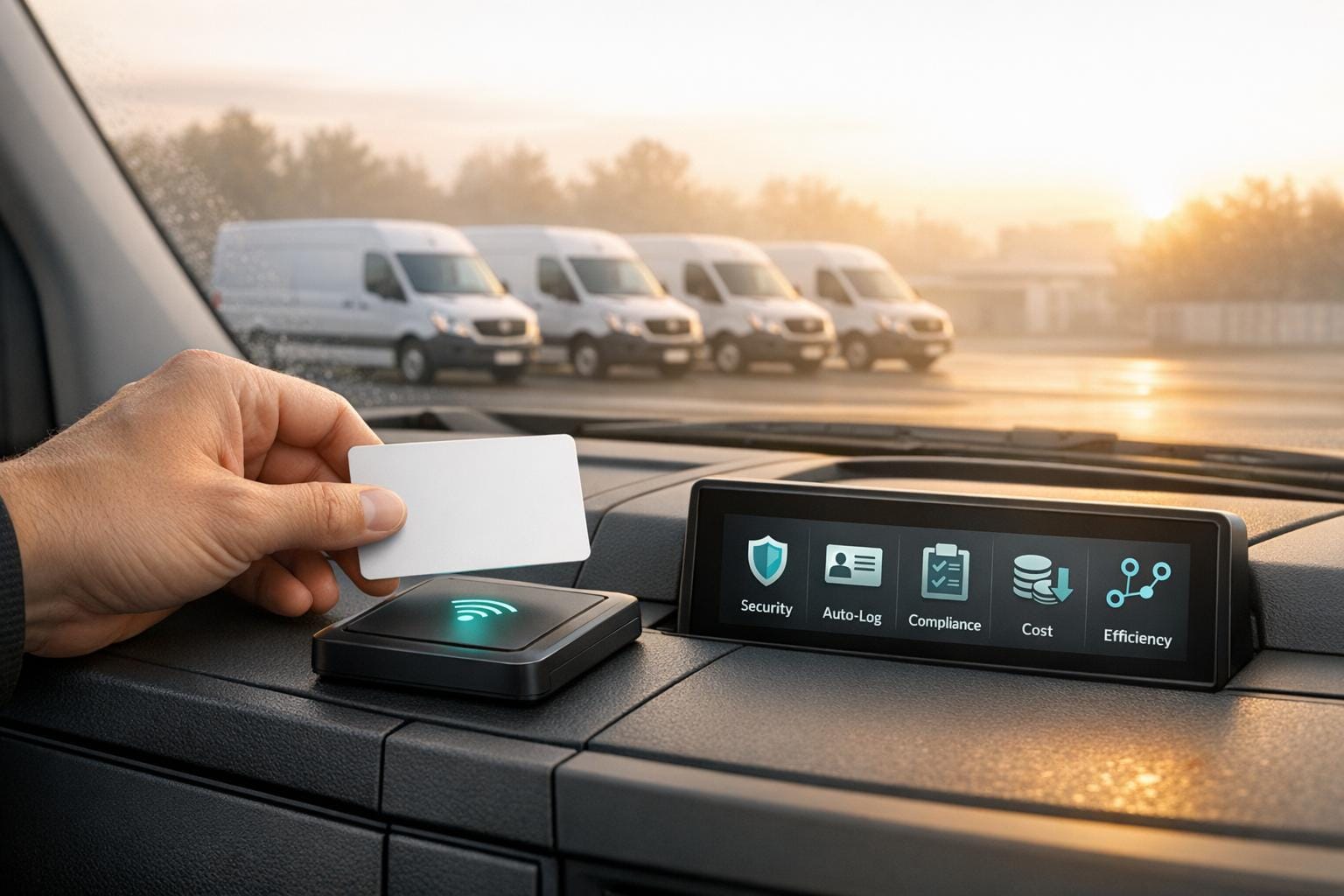
RFID driver ID systems make fleet management easier, safer, and more efficient. These systems use RFID tags or cards to identify drivers, ensuring only authorised individuals can access vehicles. They also automate tracking, compliance, and reporting tasks, saving time and reducing errors.
Here’s what they bring to the table:
- Enhanced security: Only verified drivers can start vehicles, and features like remote immobilisation and geofencing add extra protection.
- Accurate tracking: Automatically logs driver and vehicle data, improving oversight and reducing manual errors.
- Improved efficiency: Simplifies admin tasks like driver assignment and vehicle allocation, freeing up time for managers.
- Simplified compliance: Automatically records driving hours, rest periods, and other data for audits and inspections.
- Cost savings: Reduces fuel waste, unauthorised use, and operational expenses while encouraging responsible driving.
RFID systems are affordable, with basic kits costing £40–£80 per vehicle, and they integrate seamlessly with telematics platforms for even more functionality. Whether you’re managing a logistics fleet or a car-sharing service, these tools provide the clarity and control you need to keep operations running smoothly.
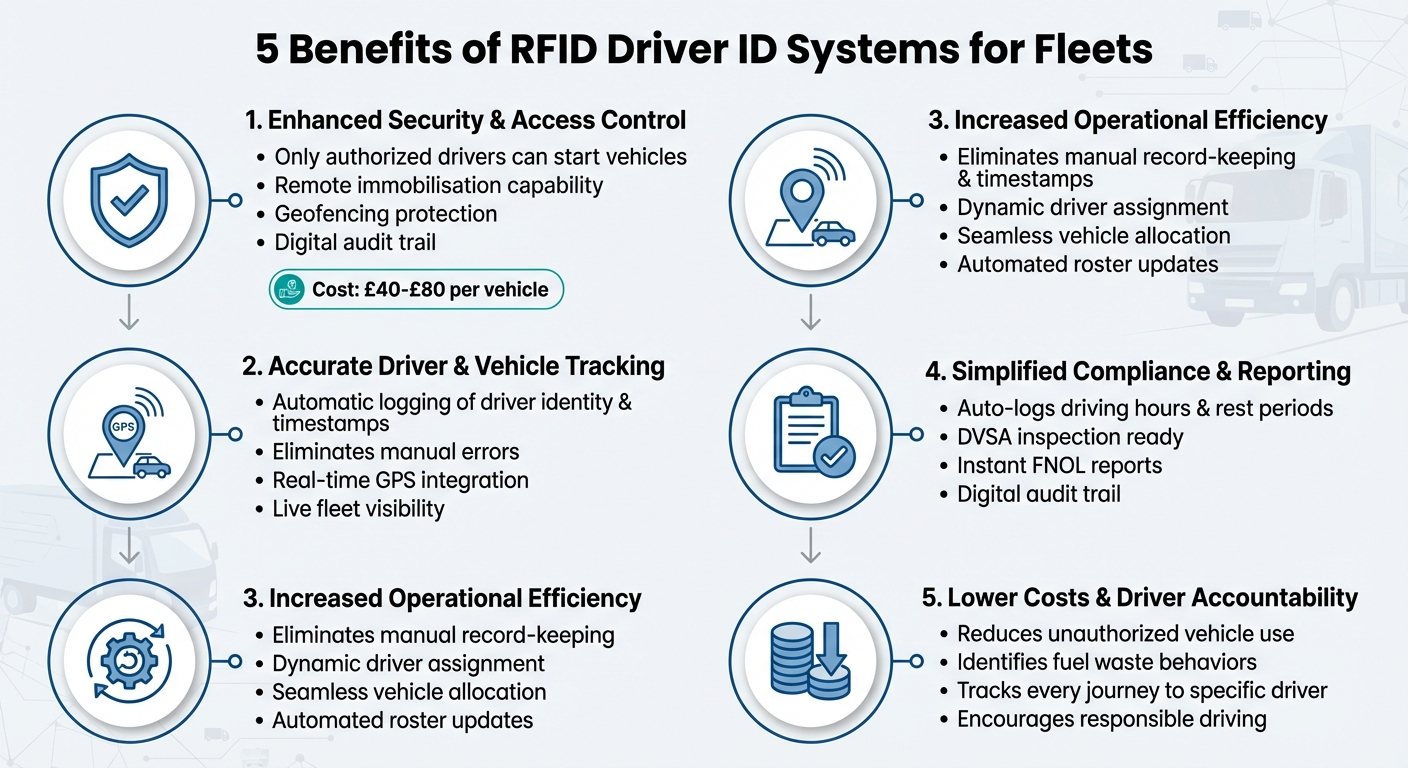
5 Key Benefits of RFID Driver ID Systems for Fleet Management
Driver registration using iButton reader or RFID reader
1. Better Security and Access Control
RFID driver ID systems act as digital security guards, ensuring only authorised personnel can operate company vehicles. Each driver gets a unique RFID tag that must be scanned before starting a vehicle, adding a layer of accountability and control.
When combined with remote immobilisation, these systems take security up a notch. If the RFID tag isn't presented, the vehicle's engine remains immobilised. Some advanced systems even include tamper and jamming detection, alerting managers to any unauthorised interference. On top of that, geofencing adds another layer of protection by setting virtual boundaries. For instance, you can establish secure zones around parking areas or restrict access to high-risk locations. If a vehicle leaves the designated area without proper authorisation, the system immediately sends an alert - perfect for overnight security or preventing unauthorised use during off-hours.
These systems also create a detailed audit trail, logging driver identity, trip start and end times, and locations. In shared fleet setups, like pool cars, this makes it easy to trace every action back to a specific individual, which is invaluable for audits or resolving disputes.
Basic RFID kits are relatively affordable, costing between £40 and £80 per vehicle. For maximum security, these systems can be integrated with HR platforms, ensuring all communications remain encrypted and secure.
2. More Accurate Driver and Vehicle Tracking
RFID systems bring clarity to fleet management by automatically logging driver identities, vehicle details, and timestamps as soon as the RFID tag is scanned. This automation simplifies record-keeping and provides valuable operational data.
By removing the risk of manual logging errors, RFID technology significantly boosts efficiency. Manual logbooks can be riddled with mistakes, missing entries, or even intentional tampering. In contrast, RFID ensures every driver authentication is recorded accurately. When combined with GPS data, it delivers real-time insights into vehicle locations, usage trends, and driver performance - key elements for managing fleets effectively.
This accurate data plays a crucial role in refining route planning and dispatch decisions. Fleet managers gain real-time oversight, including live maps that display vehicle positions alongside driver names. This level of visibility not only improves fleet utilisation but also allows for quicker responses to customer queries.
For regulatory compliance, RFID systems provide an audit trail that proves invaluable during inspections. They help verify working hours and rest periods, ensuring adherence to legal requirements. Alerts can also be configured to flag unauthorised drivers attempting to access vehicles, ensuring that only licensed and qualified personnel operate your fleet.
Beyond tracking, the detailed data collected can highlight driving behaviours, helping identify top-performing drivers for recognition or pinpointing those who may benefit from additional training. This targeted approach can reduce costs and improve overall performance - something manual systems or white-label van tracking solutions simply can't achieve.
3. Increased Operational Efficiency
RFID driver ID systems simplify administrative tasks by automatically tracking driver activity with a quick tag tap. This eliminates the need for manual record-keeping, freeing up time for managers to focus on more strategic tasks. It also improves vehicle allocation processes.
In shared fleet operations, these systems support "Dynamic Driver Assignment." This means any authorised driver can access any available vehicle with a simple swipe, reducing idle time and ensuring assets are used to their full potential.
"The true value of a driver ID card emerges when combined with robust fleet software. Modern platforms allow sorting reports by driver instead of just vehicle, giving managers insight into individual fuel efficiency and productivity." – Andre Silva
When integrated with fleet management software, these systems streamline operations further. Automated updates to driver rosters, whether through API or CSV imports, ensure smooth transitions. Syncing with HR databases adds another layer of convenience, keeping naming conventions consistent and automatically updating permissions as staff roles evolve.
Additionally, real-time resource management becomes possible. Managers can instantly see which driver is using which vehicle, allowing for quick adjustments during busy periods or unplanned demands. This approach not only improves asset usage but also reduces operational overhead.
4. Simplified Compliance and Reporting
RFID driver ID systems automatically log essential compliance data such as start and end times, driving hours, rest periods, and vehicle assignments. This creates a comprehensive digital audit trail that aligns with DVSA inspection standards.
These systems also track shift timings with precision and generate First Notification of Loss (FNOL) reports instantly. This eliminates delays in reporting and speeds up insurance claim processes. Additionally, driver behaviour scorecards provide valuable insights for accurate risk assessments. By automating compliance, the system ensures detailed reporting and efficient incident management.
The system goes further by generating in-depth reports on vehicle inspections, maintenance schedules, and daily route calculations. By automating tasks that previously required manual input, it significantly reduces administrative work. Fleet managers benefit from a ready-to-use audit trail that meets regulatory requirements without the hassle of paperwork.
AI-powered crash analysis adds another layer of value by offering critical details like impact speed and force measurements, which are essential for no-fault claims.
5. Lower Costs and Greater Driver Accountability
RFID systems not only improve security and efficiency but also help reduce costs and promote better driver accountability.
With RFID driver ID systems, operational expenses are reduced by limiting unauthorised vehicle use. Fleet managers can effortlessly update driver permissions through the cloud, instantly restricting access when needed.
Every journey is tied to a specific driver, making it easier to address issues like fuel waste. For instance, behaviours such as excessive idling, harsh acceleration, or speeding can be pinpointed and corrected through targeted coaching, encouraging more responsible driving habits.
Dynamic driver assignment further streamlines operations by allowing drivers to switch vehicles while maintaining accurate records, ensuring optimal fleet usage. Some systems even include an in-cab buzzer that remains active until the driver’s identity is confirmed, preventing anonymous trips altogether.
The hardware requirements for RFID systems are straightforward. A typical setup includes an RFID/NFC reader, a buzzer for alerts, and a GPS tracker with a digital input connected to the ignition. RFID cards (contactless and credit card–shaped) and iButton keys (durable and designed for heavy-duty use) are the most common tools used. Combined, these elements help reduce costs and improve accountability across your fleet.
Conclusion
RFID driver ID systems offer a range of benefits for fleet management. By limiting vehicle access to authorised drivers, they improve security. They also enhance tracking accuracy by associating each journey with a specific driver, while automated data synchronisation helps streamline operations. Features like automated mileage and working hour recording make compliance easier, and better driver accountability contributes to cost savings and improved efficiency.
A typical setup includes an RFID reader paired with a GPS tracker connected to the vehicle's ignition. Drivers authenticate themselves using contactless RFID cards or durable iButton keys before starting the vehicle. This system creates a detailed audit trail, making it simpler to analyse driving patterns, resolve issues, and encourage safer, more economical driving habits.
Combining RFID technology with fleet management systems also allows for flexible driver assignments and provides better operational oversight through automated alerts and synchronised data.
For businesses ready to adopt these technologies, GRS Fleet Telematics offers advanced van tracking solutions, featuring dual-tracker technology and an impressive 91% recovery rate for stolen vehicles.
FAQs
How hard is RFID driver ID to install?
Installing RFID driver ID systems is generally simple, particularly with options like quick-connect or plug-and-track setups. These systems are built for hassle-free installation, helping businesses keep disruptions to a minimum. Depending on the system, you can choose professional installation or handle it yourself. In many cases, it’s as easy as attaching RFID fobs or cards to existing vehicle access points. This straightforward process makes it a practical choice for boosting fleet security and management.
Will RFID driver ID work with our telematics?
RFID driver ID systems work well with telematics, offering a practical way to boost fleet security and improve operations. These systems integrate effortlessly with platforms like GRS Fleet Telematics, enhancing tracking capabilities, strengthening security measures, and promoting greater driver accountability across your fleet.
What happens if a driver loses their RFID card?
If a driver misplaces their RFID card, they will need to request a replacement or rely on an alternative method for authentication. Since RFID systems depend on physical tokens, losing the card could disrupt vehicle access and security until a new one is issued.